
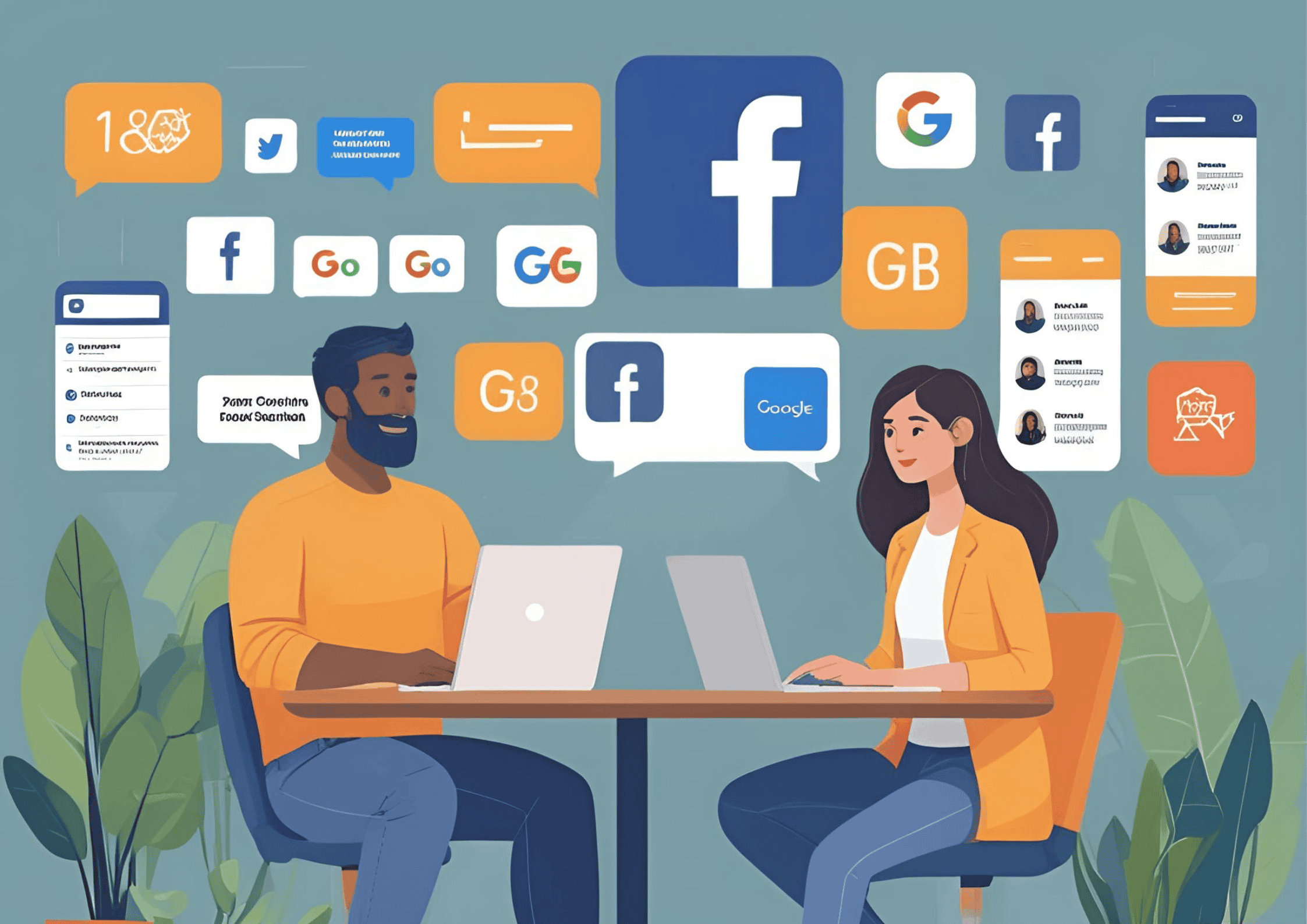

As a coach, your true impact comes from connecting with individuals who need your guidance, insight, and expertise to transform their lives or businesses. You possess valuable knowledge, unique frameworks, and a deep desire to help others reach their full potential. But in a crowded marketplace, simply being great at what you do isn’t enough to consistently fill your client roster. You need to be seen, heard, and discovered by the right people at the right time. This is where the strategic power of paid advertising—specifically Facebook Ads and Google Ads—becomes an indispensable tool in digital marketing services for coaches.
Many coaches find themselves relying heavily on referrals, networking, or organic social media efforts. While these channels are valuable, they often lack the predictability and scalability needed to achieve consistent growth. Imagine having a reliable system that can proactively bring ideal clients directly to your virtual doorstep. That’s the promise of a well-executed paid advertising strategy. It’s not about being pushy or inauthentic; it’s about leveraging powerful platforms to intelligently connect your specialized coaching services with those actively seeking the transformation you offer.
The Challenge of Finding Your Ideal Clients Organically
Building a thriving coaching business through purely organic methods often presents several hurdles:
- Limited Reach: Relying on your existing network or social media posts means you’re often only reaching people already familiar with you or your immediate circle. Breaking into new audiences becomes a slow, laborious process.
- Inconsistent Lead Flow: Organic channels are notoriously unpredictable. One month might bring a surge of inquiries, while the next could be a dry spell, making it difficult to plan and scale your business.
- High Time Investment: Creating consistent, high-quality content, engaging daily on social media, and attending endless networking events are incredibly time-consuming. These efforts often take away from the core work of coaching your clients.
- Difficulty Targeting: While you can build a community organically, precisely targeting individuals based on specific pain points, income levels, or stages of life is challenging without robust advertising tools.
- Measuring ROI is Tricky: It’s harder to directly attribute new clients to specific organic activities, making it difficult to optimize your efforts and understand what’s truly working to grow your practice.
These challenges highlight why many successful coaches eventually turn to paid advertising. It offers a direct, measurable, and scalable pathway to finding new clients.
Why Facebook Ads and Google Ads Are a Power Duo for Coaches
Facebook (Meta) Ads and Google Ads represent the two giants of online advertising, each offering distinct advantages that complement each other perfectly for coaching services.
Facebook Ads (and Instagram Ads)
- Audience Discovery and Nurturing: Facebook’s strength lies in its ability to target people based on their interests, demographics, behaviors, and even life events. This is invaluable for coaches because people aren’t always actively searching for a coach but might be open to the idea if a relevant solution is presented to them.
- Building Awareness and Brand Recognition: Visually compelling ads (images, videos) on Facebook and Instagram can introduce your coaching brand to a broad, yet targeted, audience, even if they’re not yet ready to buy.
- Nurturing Warm Audiences: You can create custom audiences from your email lists, website visitors, or even those who’ve engaged with your social media content. This allows you to retarget people who already know you, significantly increasing conversion rates.
- Lead Generation Focused Ads: Facebook offers specific ad objectives like “Lead Generation” which allows users to submit their contact info directly within the ad, simplifying the process.
- Lower Initial Cost Per Click (CPC): Generally, Facebook Ads tend to have a lower CPC than Google Search Ads, making them a cost-effective way to get in front of a large, relevant audience, especially for top-of-funnel awareness. Average CPL (Cost Per Lead) for “Personal Services” (which coaching falls under) on Facebook can range from around $20 to $50, though this varies greatly by niche and ad quality.
Google Ads
- Intent-Based Targeting: Google’s primary strength is capturing intent. When someone types “life coach for career change” or “executive coach near me” into Google, they are actively searching for a solution. This makes Google Search Ads highly effective for capturing high-quality, ready-to-buy leads.
- Immediate Visibility: With Google Search Ads, you can appear at the very top of search results for relevant keywords, instantly putting your service in front of someone actively looking for it.
- Local Targeting: For coaches who serve local clients, Google Ads offers robust geographic targeting, ensuring your ads are seen by people in your specific area.
- Direct Response Focus: Google Ads are often geared towards immediate action, such as a phone call, website visit, or form submission, from someone who knows exactly what they need.
- Higher Conversion Rates for High Intent: While the CPC can be higher (averaging around $2-$5 for coaching keywords, but potentially much higher for competitive niches), the conversion rates for highly targeted search campaigns tend to be stronger because of the explicit user intent. Average CPL for coaching services on Google Ads can range from $50-$150, but these leads are typically further down the buying funnel.
Crafting Your Ads for Coaching Success
Running effective ads isn’t just about setting a budget and pressing “go.” It requires thoughtful strategy, compelling messaging, and continuous optimization.
1. Define Your Ideal Client (The Niche is Key) Before you spend a single cent, get crystal clear on who you want to coach. The more specific, the better. Are they executives facing burnout? New mothers seeking work-life balance? Entrepreneurs struggling with strategy? Each niche has unique pain points, aspirations, and language. This clarity will inform every aspect of your ad campaigns, from targeting to ad copy.
2. Develop Irresistible Offers and Lead Magnets Coaching is a significant investment. Few people will sign up for a high-ticket coaching package on a first impression. You need stepping stones.
- Free Consultation/Discovery Call: This is a staple. Frame it as a low-pressure opportunity for a potential client to gain clarity or solve a small problem.
- Webinar or Workshop: Offer a free webinar on a topic highly relevant to your niche. This builds trust and positions you as an expert.
- E-book or Guide: Create a valuable downloadable resource that addresses a key pain point of your ideal client.
- Mini-Course or Challenge: A short, impactful free course or challenge can showcase your coaching style and deliver immediate value.
These lead magnets allow you to capture contact information and begin a nurturing process.
3. Master Your Ad Copy and Visuals
- Speak to Pain Points and Aspirations: Your ads should immediately resonate with your ideal client’s current struggles and future desires. Use language that shows you understand them.
- Instead of: “Life Coaching Services”
- Try: “Tired of feeling stuck? Unlock your full potential with personalized coaching.”
- Highlight Benefits, Not Just Features: What transformation will your coaching bring?
- Instead of: “I offer 10 coaching sessions.”
- Try: “Gain clarity, confidence, and a clear action plan to achieve your biggest goals.”
- Strong Call to Action (CTA): Tell people exactly what you want them to do. “Learn More,” “Download Your Free Guide,” “Book a Discovery Call,” “Register Now.”
- Compelling Visuals: For Facebook and Instagram, use high-quality images or videos that evoke emotion, show genuine human connection, or illustrate the desired outcome of your coaching. Avoid stock photos that look generic. A short video of you speaking directly to the camera, explaining a concept or offering a quick tip, can build immense trust.
Implementing Your Ad Campaigns Step-by-Step
For Facebook & Instagram Ads:
- Set Up Your Facebook Business Page and Ad Account: Ensure these are properly configured and linked.
- Install the Meta Pixel and Conversions API: This is non-negotiable. The Pixel tracks website visitors and actions, allowing for retargeting and conversion tracking. The Conversions API enhances data accuracy.
- Define Your Campaign Objective: For lead generation, popular choices include “Leads” (for lead forms), “Traffic” (to send to a landing page), or “Conversions” (if you’re optimizing for booking calls directly).
- Audience Targeting: This is the art of Facebook Ads.
- Demographics: Age, gender, location, language.
- Interests: What pages do they follow? What books do they read? What topics do they engage with? (e.g., “personal development,” “small business,” “mindfulness,” “leadership”).
- Behaviors: For example, “Engaged Shoppers,” “Small Business Owners.”
- Custom Audiences: Upload your email list, create audiences of website visitors, or people who’ve watched your videos.
- Lookalike Audiences: Once you have a decent-sized custom audience, Facebook can find new people who “look” like your existing best clients.
- Ad Placement: Start with “Automatic Placements” to let Facebook optimize, or choose specific placements (Facebook Feed, Instagram Feed, Stories, Messenger).
- Budgeting and Scheduling: Set a daily or lifetime budget. For coaches, starting with a daily budget of $10-$20 can be a good test.
- A/B Test Everything: Test different headlines, ad copy, images, videos, and CTAs to see what resonates best with your audience.
- Monitor and Optimize: Regularly check your results in Facebook Ads Manager. Pay attention to Cost Per Lead (CPL), Click-Through Rate (CTR), and Conversion Rate. Adjust targeting, bids, or creative as needed.
For Google Ads:
- Set Up Your Google Ads Account: Link it to your Google Analytics account for comprehensive tracking.
- Keyword Research: This is the backbone of Google Search Ads. Use Google Keyword Planner (free tool) to find terms people use when searching for coaching.
- Broad Keywords: “life coach,” “career coach” (can be competitive).
- Niche Keywords: “executive coach for startups,” “wellness coach for women.”
- Long-Tail Keywords: More specific phrases like “how to find a business coach near me,” “online relationship coaching for couples.” These often have lower search volume but higher intent.
- Negative Keywords: Crucial for saving money. Exclude terms like “free,” “jobs,” “certification,” if you’re not offering those.
- Ad Groups: Organize your keywords into tightly themed ad groups. Each ad group should have highly relevant ads.
- Example: One ad group for “executive coaching,” another for “leadership development.”
- Craft Compelling Ad Copy:
- Headlines: Use your keywords and strong benefit-driven statements. You get up to three headlines.
- Descriptions: Provide more detail on your unique selling proposition and the transformation you offer.
- Extensions: Add sitelink extensions (e.g., direct links to “Testimonials,” “About Me,” “Programs”), call extensions, and callout extensions to provide more information and options.
- Landing Page Optimization: Your ad should lead to a dedicated landing page (not just your homepage) that is highly relevant to the ad’s message. It should have a clear headline, compelling copy, testimonials, and a prominent call to action.
- Bidding Strategy: Start with a manual bidding strategy like “Enhanced CPC” or “Maximize Clicks” to gain data, then potentially switch to automated strategies like “Target CPA” (Cost Per Acquisition) once you have conversion data.
- Geographic Targeting: Target specific cities, regions, or countries where your ideal clients are located.
- Remarketing Lists for Search Ads (RLSA): Target people who have visited your website before with customized ads when they search on Google. This is highly effective.
- Monitor and Refine: Constantly review your search terms report, add negative keywords, adjust bids, and refine your ad copy based on performance data (CTR, Conversion Rate, CPC, CPL).
Maximizing Your Advertising ROI for Sustainable Growth
Running successful ads for coaching services is a marathon, not a sprint. It requires patience, iteration, and a commitment to data-driven decision-making.
- Allocate Budget Wisely: Start with a modest budget for testing ($300-$500 per month across platforms for initial testing is a reasonable starting point for many coaches) and scale up as you see positive results. Don’t throw money at something that isn’t working.
- Track Everything: Ensure your conversion tracking is set up correctly on both platforms (Meta Pixel, Google Ads conversions) so you know exactly which ads and keywords are driving leads and sales.
- Nurture Your Leads: The ad is just the beginning. Have a clear follow-up strategy for new leads, whether it’s an automated email sequence, a personalized email from you, or a direct call. Provide value before asking for the sale.
- Test New Ad Creatives Constantly: Audiences get fatigued. Keep your ads fresh by regularly creating new variations.
- Understand Your Metrics: Don’t just look at clicks. Focus on Cost Per Lead (CPL), Cost Per Acquisition (CPA), and your Return on Ad Spend (ROAS).
- Leverage Retargeting: Show specific ads to people who have interacted with your website or social media. This is often the most cost-effective way to convert leads.
- Invest in a Strong Landing Page: A poor landing page can kill even the best ad campaign. It needs to be clear, concise, persuasive, and mobile-friendly.
- Consider Professional Help: If the technical aspects feel overwhelming, consider hiring a digital marketing specialist who understands the coaching industry. Even a short-term consultation can set you on the right path.
The Path to a Thriving Coaching Practice
For coaches ready to move beyond unpredictable organic growth, Facebook Ads and Google Ads offer a powerful, scalable solution. They enable you to bypass the noise, connect directly with your ideal clients, and fill your coaching calendar with consistency and confidence. It’s about taking control of your client acquisition, freeing you to focus your energy where it matters most: delivering transformative coaching and making a profound impact on the lives of others. With a strategic approach and a willingness to learn and adapt, these platforms can truly be the ultimate guide to propelling your coaching business forward.

